
The marketing funnel, also known as the sales funnel or conversion funnel, is an idea that is older than the Internet. In fact, marketers have used it for over 100 years. Everyday people come across different brands through social media, websites, or recommendations, but not every person who discovers a brand for the first time instantly becomes their customer. People usually go through different stages of a marketing funnel from discovering a brand to becoming loyal customers. The funnel is wide at the top and narrows toward the bottom because a lot of potential customers will enter the top of the funnel, but only some of them will reach the bottom to become loyal customers. Some people lose interest, compare competitors or decide not to purchase. This is why businesses try to improve customer experience at every stage of the funnel. There are a lot of different versions of marketing funnels. Marketing funnels have been revised over time to reflect changes in business, technology, and even customer behaviour.
What is a Marketing Funnel?
A marketing funnel is a visual representation of the process through which people go from first learning about a brand to becoming loyal customers. Marketing funnel helps businesses to understand their potential customers and improve their marketing strategies at each stage. By understanding how customers move through the funnel, businesses can create better content, attract the right audience, and increase customer conversions.
Below is a simple version of a marketing funnel with four stages:
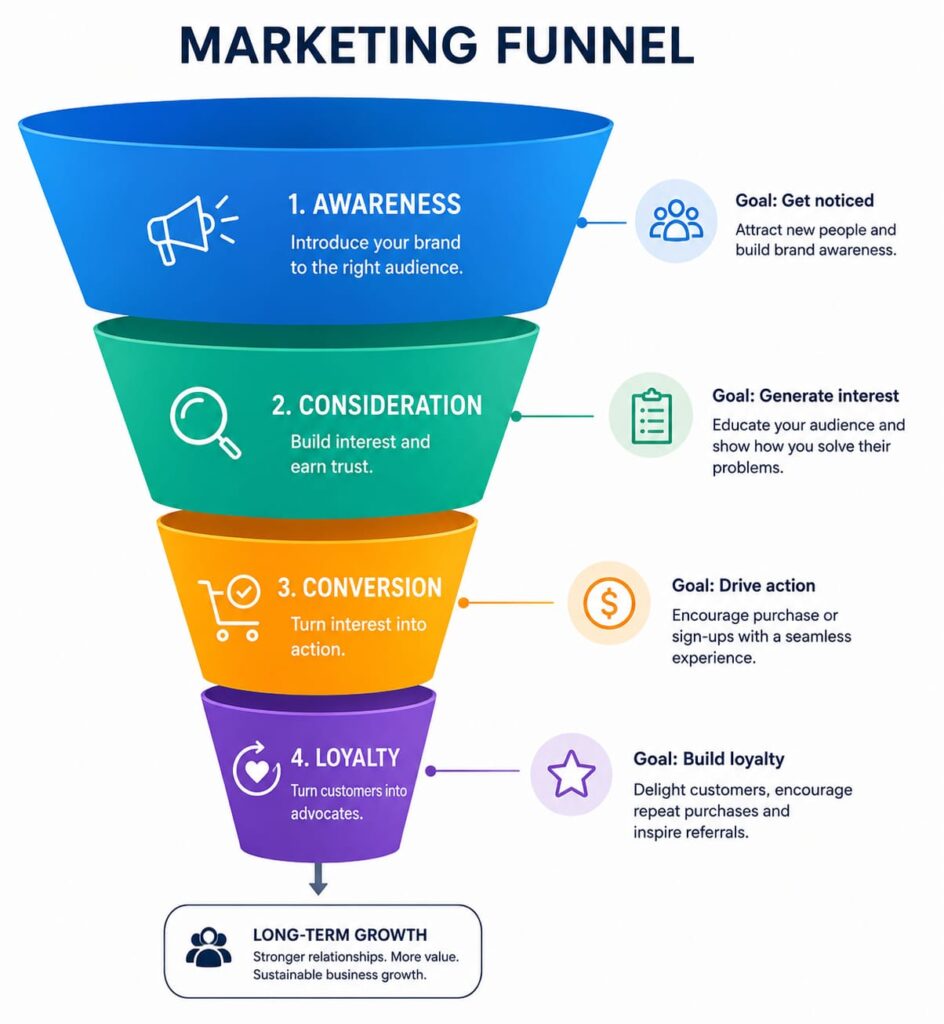
- Awareness– People first come to know about a brand or product.
- Consideration– People start thinking about whether the product is right for them.
- Conversion– People decide to buy the product or take action.
- Loyalty– Customers stay connected with the brand and keep coming back.
Why Marketing Funnel is important?
The marketing funnel is important because it helps businesses understand customer behaviour at different stages of the buying journey. It allows companies to use the right marketing strategies, improve customer experience, and increase conversions. A well-planned funnel also helps businesses build long-term customer relationships and loyalty.
Tactics involved in different stages of Marketing Funnel
1. Awareness tactics:
- Optimizing website content around specific search terms.
- Paying to play ads on websites, social media or email.
- Forming promotional partnerships with other brands or influencers.
2. Consideration tactics:
- Serve ads based on products and pages visited.
- Blog posts, newsletters, webinars
- Free samples, tools, trial memberships.
3. Conversion tactics:
- Accurate product description
- Smooth checkout process
- Clear return policy
- Organised website
4. Loyalty tactics:
- Great experience during and after purchase
- Follow up emails
- Rewards programs
- Social media engagement
Marketing Funnel Case Study: MERSEA
MERSEA, a lifestyle brand is a good example of a marketing funnel. The company used different marketing strategies at each stage of the marketing funnel to attract potential customers, encourage purchases and build customer loyalty.
At awareness stage, MERSEA used online advertising platforms such as Google ads and Facebook ads to introduce its products to potential customers. These ads helped the brand reach people who were interested in lifestyle and fashion related products.
At consideration stage, MERSEA continues to apply online advertising and also uses social media marketing and email marketing to keep customers engaged. They also used a marketing strategy named remarketing to deliver ads to people who previously visited their website. These strategies helped visitors to remind about the products and encouraged them to learn more about the brand.
At conversion stage, MERSEA focused on improving purchase experience. The company used to send follow-up emails for abandoned carts to encourage customers to complete their purchases. This helped them improve conversion rates.
At loyalty stage, MERSEA stayed connected with customers through regular emails, product updates and text message communication. These strategy helped to turn their first time buyers into repeat customers and build long-term relationships.
This well functioned marketing funnel approach helped MERSEA to increase its online sales from 10% to 40% within just 2 years of focusing on e-commerce and building an online marketing funnel. Because of the satisfied customers and the well-developed loyalty stage of its marketing funnel, around 50% of MERSEA’s customers are returning customers.
Conclusion
The marketing funnel helps businesses understand how customers move through different stages before becoming loyal buyers. From awareness to loyalty, each stage plays an important role in business growth and customer retention. Businesses that understand the marketing funnel can create better strategies to attract, convert and retain customers effectively.
Impressive…keep it up👏
Thank you 🙌🏻
Wow! Amazing
Thanks a lot 🙌🏻
Pingback: Case Study: How BLK & Bold Found Its Brand Voice