
Creating a website is only the beginning of building an online presence. With millions of webpages available on the internet, businesses and creators need a way to help people discover their content more easily. This is where Search Engine Optimization (SEO) becomes important.
SEO is the process of improving webpages so they appear more effectively in search engine results. It involves creating useful content, improving website structure, and making webpages easier and faster to use. Good SEO helps websites attract relevant visitors organically instead of relying only on paid advertisements.
What is SEO?
Search Engine Optimization (SEO) refers to the practice of improving webpages so they appear higher in search engine results and reach the right audience more effectively.
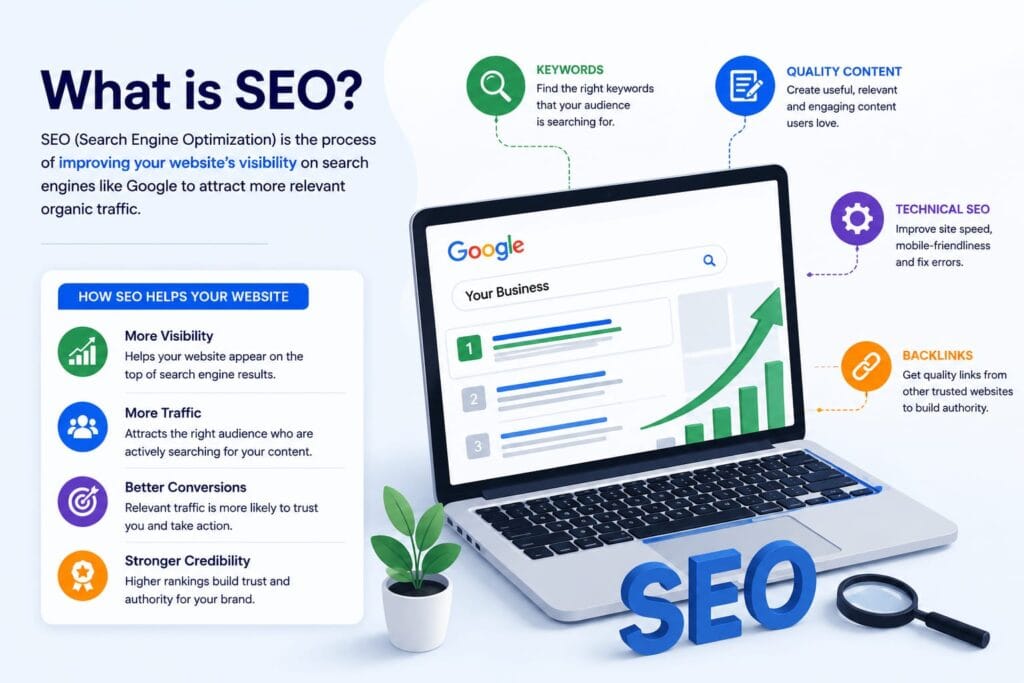
Why is it Important?
SEO is important because it helps websites become easier to discover through search engines. When a website is properly optimized, users can find relevant information, products, or services more quickly and easily.
Good SEO also improves the overall experience for visitors. Fast-loading pages, clear content, and simple navigation make websites more user-friendly and encourage people to spend more time exploring them.
For businesses and creators, SEO can help attract consistent organic traffic without relying entirely on paid advertising. By understanding what users are searching for and creating useful content around those topics, websites can build stronger online visibility over time.
Pre-SEO Work
- Know your website or organisation’s goals
- Know the customers
- Brainstorm content for people first
- Know your competitors well
How to Apply SEO
SEO can be applied by improving both website content and the overall user experience. One of the most important steps is creating content that matches what people are actually searching for online. Articles should be clear, relevant, and easy to understand so users can quickly find useful information.
Using keywords naturally in titles, headings, and content helps search engines understand what a webpage is about. A well-written title and meta description can also encourage more users to click on a page from search results.
Website performance is another important part of SEO. Fast-loading pages, mobile-friendly design, and simple navigation make websites easier for visitors to use. Images should be compressed properly and include descriptive alt text to improve accessibility and page speed.
SEO also involves organizing webpages clearly so both users and search engines can move through the website more efficiently. Tools like Google Search Console can help website owners monitor performance, identify issues, and improve visibility over time.
Practical SEO Example
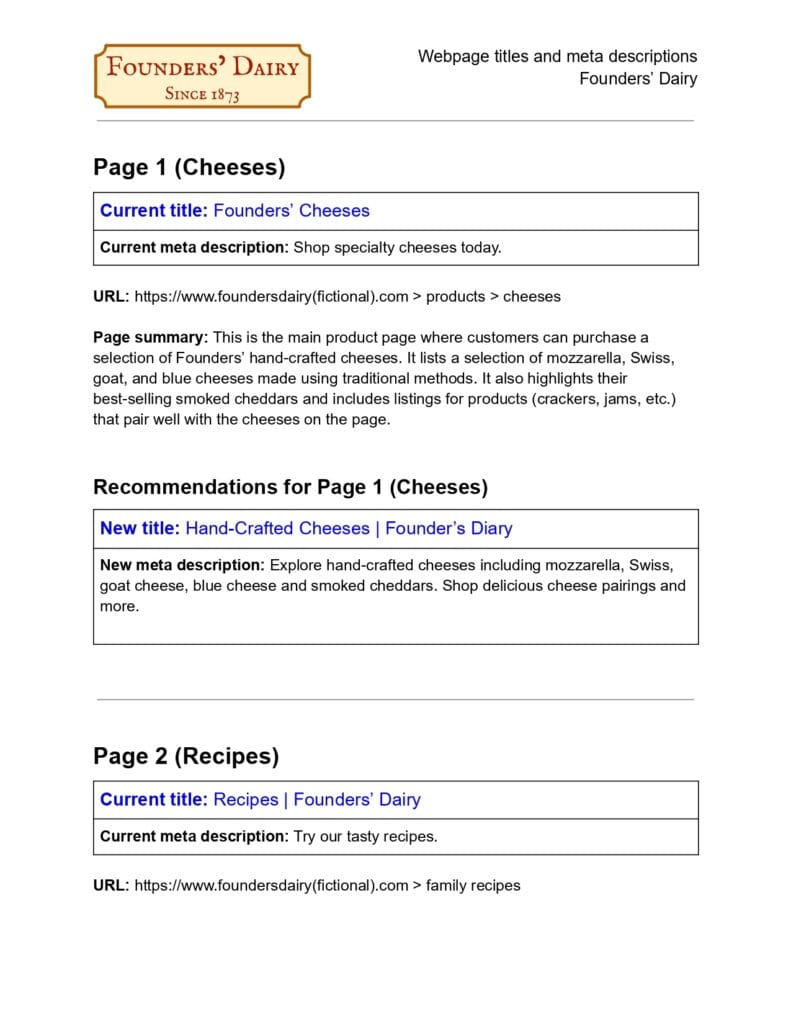
As part of learning SEO, I completed a practical assignment focused on improving webpage titles and meta descriptions for a sample business website. The activity showed how clear and optimized content can improve search visibility and make webpages easier for users to understand.

Conclusion
SEO is not only about improving rankings on search engines, it is also about creating websites that are useful, accessible, and easy for people to navigate. By focusing on quality content, user experience, and website performance, businesses and creators can build a stronger online presence and reach the right audience more effectively.
Such a well-written blog 👏
🙌🏻❤️